Thursday, August 27, 2009

The Door of No Return by Sarah Mussi

Main character: 16-year-old Zac Baxter
Location: England and Ghana
Time period: Contemporary, with references to events in the 1700's
Genre: YA Fiction, Suspense, Slavery

The Door of No Return is a exciting, suspenseful story that deal with that approaches the familiar topic of African Slavery from a totally different angle--at least it's a different angle for those of us living in the United States. Instead of focusing on slavery in the American South before the Civil War, it looks at the complicity of the British government in the slave trade.

Zac has grown up hearing his grandfather telling stories about how he is the last descendant of an African king who was tricked out of a golden treasure intended to ransom his youngest son who had been captured by slave traders. Though the ransom was paid, the boy was never returned to his father but was instead sent to a plantation in Jamaica. Zac's grandfather was adamant that his family, and all families descended from slaves, deserved compensation from the British government and claimed to have documents that verified his story. Zac didn't really believe in his grandfather's stories--at least not until the night that they were mugged and his grandfather was murdered. Then Zac's house is robbed. And Zac is attacked on the street. Then Zac is removed from the foster house he was sent to when his foster father begins to ask too many questions.

There are a number of things that I like about this book. Zac is a very appealing kid, even in his most angry and sullen moments. After reading a number of suspense books in which the main character is betrayed by someone he trusts too much, I was glad to see that Zac developed a healthy dose of paranoia. Of course, he still winds up trusting the wrong person, but I give him points for the many people he is wary of. I really liked that his foster parents were genuinely concerned about him, even after he was taken from their care and they no longer had an official duty toward him. He makes some friends along the way, patricularly Ashley, Mina, and Badu--young people like himself whose own life experiences and family stories give him the clues he needs to solve the mystery and fulfill his destiny.

Tuesday, August 25, 2009

Antsy Does Time by Neal Shusterman

Main character: 8th-grader Antsy
Location: Brooklyn
Time period: Contemporary
Genre: YA Fiction

This is a sequel, of sorts, to Shusterman's "The Schwa Was Here." And as in that book, the secondary character is named for a Diacritical mark--in this case Gunnar Umlaut (A+220). (What's in store for his next Antsy book? Francois Cedille? Jose Tilde?) But I digress. This is yet another Shusterman book that uses humor to mask a very serious subject.

Antsy is paired up with Gunnar to do a project based on John Steinbeck's The Grapes of Wrath. When Antsy goes over to Gunnar's house, he discovers that Gunnar is carving his own headstone--he has an extremely rare, incurable disease and only has about six months to live. Stunned, Antsy offers Gunnar a month of his own life. He even writes up a contract to formalize his gift. The next day at school, word begins to creep around and before he knows it, Antsy is speaheading a movement to extend Gunnar's life a day or a month at a time.

In the meantime, Antsy is also dealing with his workaholic father, a rapidly growing crush on Gunnar's sister, and the fact that their attempt to turn Gunnar's back yard into a recreation of the Dust Bowl has worked a little too well and is killing all the neighboring lawns as well. There is also the very strained feeling in the Umlaut household whenever Mr. Umlaut is at home.

Antsy is a great character. He is impulsive but good hearted. Even when things come tumbling down on top of him, you can't help but root for him.

Antsy Does Time is on the 2009-2010 Lone Star Reading List.

Sunday, August 23, 2009

Diamond Willow by Helen Frost

Main Character: 12-year-old Willow
Location: Alaska
Time period: Contemporary
Genre: YA Fiction, Books in Verse

This was a really lovely book about a young girl struggling to grow up, and making mistakes along the way.

Willow lives in a remote part of Alaska and spends most of her time with her dad's sled dog team. She desperately wants her parents to see that she is grown up and responsible enough to drive a small sled with one dog by herself for an overnight trip to her grandparents' home. She is finally allowed to do so, and arrives safely there. In high spirits on her return trip, she allows the dogs to run fast and doesn't see the fallen tree until it is too late. Her beloved Roxy runs into one of the branches and seriously injures her eye. Willow takes care of her as best she can, but is wracked by guilt and the fear that her parents will have Roxy put to sleep.

The story is told in different voices. When Willow is speaking, the text is written in verse that takes a diamond shape. In the center of the diamond are certain words in bold print--a hidden message revealing Willow's deepest thoughts. Other sections are narrated by the various animals who witness the events, and who are actually the spirits of Willow's Athapascan ancestors watching over her.

This is a slender book that doesn't take long to read, but it touched me deeply and at times brought me to tears.

Diamond Willow is on the 2009-2010 Lone Star Reading list.

Saturday, July 25, 2009

The Liar Cover Controversy

I don't know how many of you have been reading about the controversy over the cover of Justine Larbalestier's new book Liar. In case you've missed it, let me briefly catch you up. Justine is an Australian author who has written a number of highly regarded books. I have come late to the Justine party--the only one of her books that I've read is How to Ditch Your Fairy--so I didn't realize until this controversy erupted that she makes a point of writing about nonwhite characters. Her new book, which will come out at the end of September, is called Liar and the main character is a black teen who is proud of her short nappy hair. She is also a compulsive liar who is trying to break that habit.

The Australian cover for the book uses the letters L, I, A, R in different configurations. The American cover uses a black-and-white photograph of a white girl with long hair which crosses over the bottom of her face, covering her mouth. The controversy erupted over the disconnect between the cover image and the actual character described in the book. This more than putting a blonde on a cover when the text specifically describes a brunette (seriously--don't you sometimes wonder if the publisher/designer/artist has even read the book?) Many bloggers have seen this as an egregious example of whitewashing books that feature characters of color. In a very thoughtful blog post, Justine discusses the controversy and gives some insight into the designing of books. She does not like the American cover and fought against it, but authors have little say in such matters. One thing in that post that really struck me was that the attitude that pictures of black people on book covers do not sell--which just seems to confirm the whitewashing accusation.

Now as librarian, I very rarely buy books based on their covers. I make my selections based on reviews (both from professional journals and blogs) and patron requests. Most of the time, I do not even see what a book looks like until it has been purchased, cataloged, and put on my shelves. But this discussion has got me wondering about the covers of the books in my J and my YA section. How many do I have with people of color on the cover? How many with white people? How many with no human figures at all? Well, I don't have time right now to go back to the shelves, pull every book off, and analyze its cover, but I did just get eight new books in from the cataloging department--so let's look at those:

12 Brown Boys by Omar Tyree. Graphic illustration using silhouettes, but they are recognizably black. A photo of the author is included on the back cover. From the back cover: 12 Brown Boys by Omar Tyree is a collection of short stories that focuses on the lives of Black pre-teen boys. Readers will connect with Tyree's engaging characters including: Red Head Mike who hates his nickname, but hates his red hair even more. Chestnut, who is sent to live with relatives down south to keep him out of trouble in his Brooklyn neighborhood. William the Santa Monica super kid whose status as a scholar and entrepreneur has even his best friends hating him. Wayne, who resents his role as the oldest child until a tragedy strikes the family. Tyree has assembled a wide range of characters that reflect the diversity of experiences of Black boys - characters that are funny, serious, edgy, street-wise, studious, and all unforgettable.

Absolutely Maybe by Lisa Yee. Photograph of white girl with pink hair lying on a star on the Hollywood Walk of Fame. Summary: When living with her mother, an alcoholic ex-beauty queen, becomes unbearable, almost seventeen-year-old Maybelline "Maybe" Chestnut runs away to California, where she finds work on a taco truck and tries to track down her birth father.


Best Friends by Jacqueline Wilson. Cartoon-like illustrations of the two white girls who are the main characters, though the human figures are just a small part of the cover. Summary: Rambunctious and irrepressible Gemma has been best friends with Alice ever since they were born on the same day, so when Alice moves miles away to Scotland, Gemma is distraught over the idea that Alice might find a new best friend.


The Calder Game by Blue Balliett. Illustrations of the three main characters--two boys and a girl--all 3 white Though the illustrations take up most of the cover, the two lower pictures are rather small. Summary: When seventh-grader Calder Pillay disappears from a remote English village--along with an Alexander Calder sculpture to which he has felt strangely drawn--his friends Petra and Tommy fly from Chicago to help his father find him.
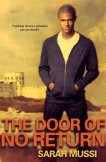


The Door of No Return by Sarah Mussi. Photograph of young (and very nice looking) black man. Summary: Sixteen-year-old Zac never believed his grandfather's tales about their enslaved ancestors being descended from an African king, but when his grandfather is murdered and the villains come after Zac, he sets out for Ghana to find King Baktu's long-lost treasure before the murderers do.


Dragon Flight by Jessica Day George. Large purple dragon with a young boy and girl, both white The image of the dragon dominates, with the humans rather small. Summary: Young seamstress Creel finds herself strategizing with the dragon king Shardas once again when a renegade dragon in a distant country launches a war against their country, bringing an entire army of dragons into the mix.


Max by James Patterson. The title takes up most of the space on this cover. At the top is a small photo-realistic illustration of a girl mostly silhouetted by shadows but hair and arms indicate she is white. Summary: When millions of fish start dying off the coast of Hawaii and something is destroying hundreds of ships, the government enlists the Flock--a band of genetically modified children who can fly--to help get to the bottom of the disaster before it is too late.


Starclimber by Kenneth Oppel. Silhouetted figures of a boy and girl, both white. (This cover strongly reminds me of Patrick Ness's great novel The Knife of Never Letting Go.) Summary: As members of the first crew of astralnauts, Matt Cruse and Kate De Vries journey into outer space on the Starclimber and face a series of catastrophes that threaten the survival of all on board.


So how can we sort these covers? Let's see--we have 2 photographs and 6 illustrations. We have 3 that feature a single character while 5 feature multiple characters. Half of them use character illustrations so small that they are barely noticeable; only two use a human image that dominates the cover. Three covers use silhouettes. Two covers feature black characters while 6 are white. Which ones will wind up being the most popular? That is a question that I won't be able to answer until my next inventory/circulation survey.

It's an interesting issue to ponder. How much does the cover picture really influence whether or not you pick up a book? I'm more likely to pick up a book because I like the author or the book is part of a series I enjoy. A cover illustration might catch my eye, but a clever title will do that too, even on a plain or dull background. It's the the text on the jacket flap (for a hardback) or the back cover (for a paperback) will determine whether I decide to read it or put it back on the shelf.

And here's another thought--do you select books differently when you're in a bookstore than you do in a library? Are you more likely to give a library book a try when you know that you don't have to pay for it? Are covers more important when selling a book than they are in checking out a book?

What do you think?

Wednesday, July 8, 2009

Evolution, Me & Other Freaks of Nature by Robin Brande

Main character: High school freshman Mena Reece
Location: Not defined
Time period: Contemporary
Genre: YA Fiction

Evolution, Me & Other Freaks of Nature is the first YA novel I've read that deals with the debate between evolution and intelligent design or, as some might frame it, science vs. religion. It is a pleasant enough read, though ultimately disappointing.

Mena Reece is not looking forward to her first day of high school. She has done something which has turned her entire conservative Christian church community against her. Her minister has denounced her from the pulpit, and even her parents are barely speaking to her because their insurance business is so closely tied to the church and they are worried that she will cost them customers. Since she is being shunned by her former friends, she begins to interact with other classmates that she never would have otherwise, including brainy Casey, her science lab partner. Casey introduces her to science fiction and fantasy, which is not as evil as she has been told.

When her science teacher, Ms. Shepherd, begins to teach a unit on evolution, Mena's church organizes a protest and demands that she also teach intelligent design. Ms. Shepherd steadfastly refuses to do so. The classroom becomes a battleground of strong wills, with Ms. Sherherd continuing to teach the unit and the protesting students turning their backs the moment the word evolution is mentioned. Then the unit is over and the class moves on to another subject.

Let me say that I am fully on the evolution side of this debate. But I have to say that this book came off as one-sided. I liked the portrayal of the teacher and her calm but firm way of dealing with the protesters. Mena and Casey are also appealing characters. I like their growing friendship and how Mena's world opens up because of him and his family. But the Christian students are portrayed as horrid, close-minded puppets who just parrot the hateful rantings of their preacher. The only one that that is not a vindictive "mean girl" is the minister's daughter who is so meek and mild that she is totally ineffectual. In the end, Mena and her parents join another church--one which (shock!) the science teacher Ms. Shepherd attends--which is much more accepting of different opinions. (And just where were these people during the rest of the book?)

In the end, I don't think that this book is going to persuade anyone to change their minds.

Evolution, Me & Other Freaks of Nature is on the 2009-2010 Lone Star Reading List.